
SUMMER CAR CARE TIPS
Summertime is road trip time! Before hitting the road this summer it’s important to take precautions with your vehicle to keep you and your family safe. Long drives and extreme temperatures can be tough on your vehicle. Dirty filters, underinflated tires, or leaking radiators can lower your fuel efficiency (or worse, lead to your vehicle breaking down).
We all know that summers in Grand Rapids and West Michigan offer some of the best weather and lake life around. Check out these tips to help make sure your vehicle is running at full steam this summer so you can enjoy the open road.
Clean Your Car: Keeping both the interior and exterior of your car doesn’t just make you feel good, it can help with vehicle maintenance! Hot temperatures can melt food and debris left in your vehicle that could damage your car’s interior, which could require a costly repair. By keeping your vehicle’s exterior clean you can protect your paint from the sun’s rays, as well as damage that can be caused by birds or insects.
Check Your Tires: It’s easy to overlook your tires when you’re concerned with your vehicle’s maintenance. However, under-inflated, over-inflated, worn down, or misaligned tires can be extremely dangerous, especially in the hot summer weather in Michigan.
When temperatures rise, your tire pressure changes approximately one to two PSI (pounds per square inch) for every 10-degree increase in the outside air temperature. You can consult your owner’s manual or the sidewall of your tire to see what your tire pressure should be, then check it with a hand pressure gauge to ensure that your tire pressure is at the correct interval.
An under-inflated tire bulges outward and puts unnecessary pressure on the sidewalls of the tire. With enough pressure and heat, the tire will eventually blow. On the other hand, an over-inflated tire makes less contact with the road and can lead to hydroplaning in wet conditions.
To check to see if you have enough tread on your tires you can use the penny trick. Simply stick a penny in the tread of your tire and if Lincoln’s head disappears, your tread is still good. Our team at Berger Service Department is happy to help with this, too.
Last but not least, don’t forget your spare tire! There’s no sense in having a spare if it’s in worse condition than the rest of your tires so make sure that it’s properly inflated and has ample tread depth.
Oil and Filter Change: Oil keeps your hardworking engine parts running clean, smooth, and cool. Getting our oil and filter changed is one of the simplest ways to increase the longevity of your vehicle. There are many different types of oil, but a good rule of thumb we follow at Berger is to change your oil every 5,000 miles or to follow your vehicle manufacturer’s oil maintenance guidelines. During the summer we do most of our driving in the heat and our engine is more likely to overheat. So be sure to at least check your oil before you head out on your family road trip!
Are you a “do it yourself” type of person? To check your oil, let your vehicle run for a few minutes, park it on a level surface, and shut off the engine. Next, open the hood and locate the oil dipstick. Be sure to wipe off the dipstick before checking your oil. When checking your oil you want to be sure to look at the oil level and at the oil itself. If you’re low on oil you can add or simply change the oil completely. The oil should be brownish-yellow and clean on the dipstick. If the oil is a dark color or there’s a lot of dirt and grime in it, you are in need of an oil change and oil filter replacement. If you prefer to leave oil life to the experts, the Berger team will check it for you!
Check Your Hoses and Belts: Keeping your engine cool is the key to summer driving in West Michigan. The hoses connected to the radiator help pump coolant to and from the engine block. The belts run the fan which helps cool the system further. If the belts snap or the hoses crack, the radiator will overheat and your car won’t be able to run.
In an effort to avoid this, it’s important to check the hoses for cracks, leaks, or any loose connections. Hoses should always be firm. They suffer from a slow deterioration process called electrochemical degradation that eats away the rubber hose from the inside. It’s extremely important to check the parts of the hose nearest to the clamps where it connects to the radiator or the engine. These are the parts of the hose that are most vulnerable. Belts can also be visually checked for damage or cracks, and be sure that the belt doesn’t look excessively slick or smooth.
Change your Air Filter: Over our harsh Michigan winters, your vehicle’s air filter can get clogged with salt and other thick debris. A clogged filter can lower your fuel efficiency.
So when should we change your air filter? The recommended interval is about every 12,000 miles for GM vehicles, but you can check your vehicle’s manual for the exact number. Road and air conditions can also affect this number. If you drive a lot on gravel or dirt roads, then your air filter is going to clog up faster than a vehicle that is used strictly for highway driving. Another way to figure out if it’s time to replace your filter is to take it out and inspect it. If it is extremely dirty and full of debris, that’s a sure sign that it’s time to replace it!
Replace Your Windshield Wipers: Michigan summers are notorious for their inconsistency. One minute you are driving down the East Beltline in the sunshine and the next minute, rainfall covers your windshield. The last thing you want to do is be driving in a downpour with streaking wiper blades.
Winter can be tough on windshield wipers, too. Snow, ice, salt, and extreme temperatures can cause cracks and tears in the rubber that can compromise the integrity of the wiper blade. Damage to the blades can cause streaks, smears, and decreased visibility. If your wipers are leaving visible streaks or cannot clear away light rain, they need to be replaced. Did you know that our GM ACDelco wiper blades are made to perfectly fit your GM vehicle? We stock wiper blades in our Quick Lube Lanes with extras stored in our warehouse to provide quick, quality service when you need it.
Check Your Brakes: Your brakes are one of the most important safety features on your vehicle, so it’s important to be sure to make sure that they are in tip-top shape for your family’s next road trip.
Brakes need to be replaced when the lining on your brake pad or brake shoe is worn down past the minimum thickness specified by the vehicle manufacturer or state law. Some of the signs that your brakes need to be checked are as follows: your brake pedal feels soft and mushy, your pedal is hard and resistant, your pedal rests too low/high, your brake light is on your dashboard, or you hear a loud and constant scraping/grinding sound coming from your brakes.
Check Your Coolant/Radiator: Vehicles are designed to run hot, but there’s a limit to how hot they should run. If an engine gets too hot, its moving metal parts can melt and fuse together. Luckily, modern vehicles are equipped with a cooling system that keeps them running at an optimal temperature.
Summertime is especially tough on cooling systems. Sitting in an idle vehicle on a hot day is one of the quickest ways to overheat your car. This is due to a lake of air flowing across the engine to keep it cool. However, a well-tuned cooling system can keep your engine running the way it should, but if you have low coolant levels or a bad fan belt, your engine temperature will rise.
This summer be sure to check under the hood for your coolant levels. The general rule is to flush your radiator and add new coolant at least every two years. Flushing the radiator is done with a special chemical that cleans debris and build-up inside your radiator.
Clean Your Battery: Did you know that summer heat can speed up the chemical reaction inside a battery causing it to become overcharged? This can dramatically shorten the lifespan of your battery. Heat can further damage your battery by evaporating internal battery fluid. To help your battery run as it should, it is helpful to keep it clean. You can do this by regularly detaching the battery cables and wiping off its terminals. Be sure to make sure that it’s strapped down tightly and that all of its connections are secure. If you suspect your battery is being overcharged or isn’t holding a charge, it’s time to replace your battery. And don’t forget, Berger Chevrolet offers free battery testing if your battery is located under your hood.
Maintain Your A/C: Summer heat pairs well with air conditioning! When the higher temperatures hit, you’re going to want a working A/C system in your vehicle. If your car is blowing out hot air when you turn your air conditioning on, you may just need a little refrigerant. Adding refrigerant to your vehicle can give your A/C a boat. If that doesn’t work, you may need to take your vehicle in for a full diagnosis.
So remember, before you hit the road this summer, make sure your vehicle is running at its peak! Harsh temperatures can wreak havoc on your vehicle both inside and out, so don’t forget to stop by our Quick Service Lanes for oil changes, filter replacements, wiper replacements, tire checks, free battery checks, and more! The best part? There’s no appointment necessary! For bigger jobs, you can schedule your appointment online directly from our website. You can also take advantage of our free pick-up and delivery for service if you live within a 15-mile radius of Berger. Drive safe and have a great summer West Michigan!
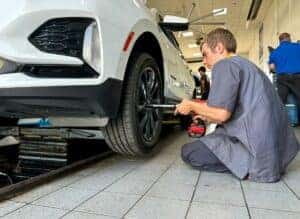
Berger’s Quick Service Lanes
0 comment(s) so far on SUMMER CAR CARE TIPS